
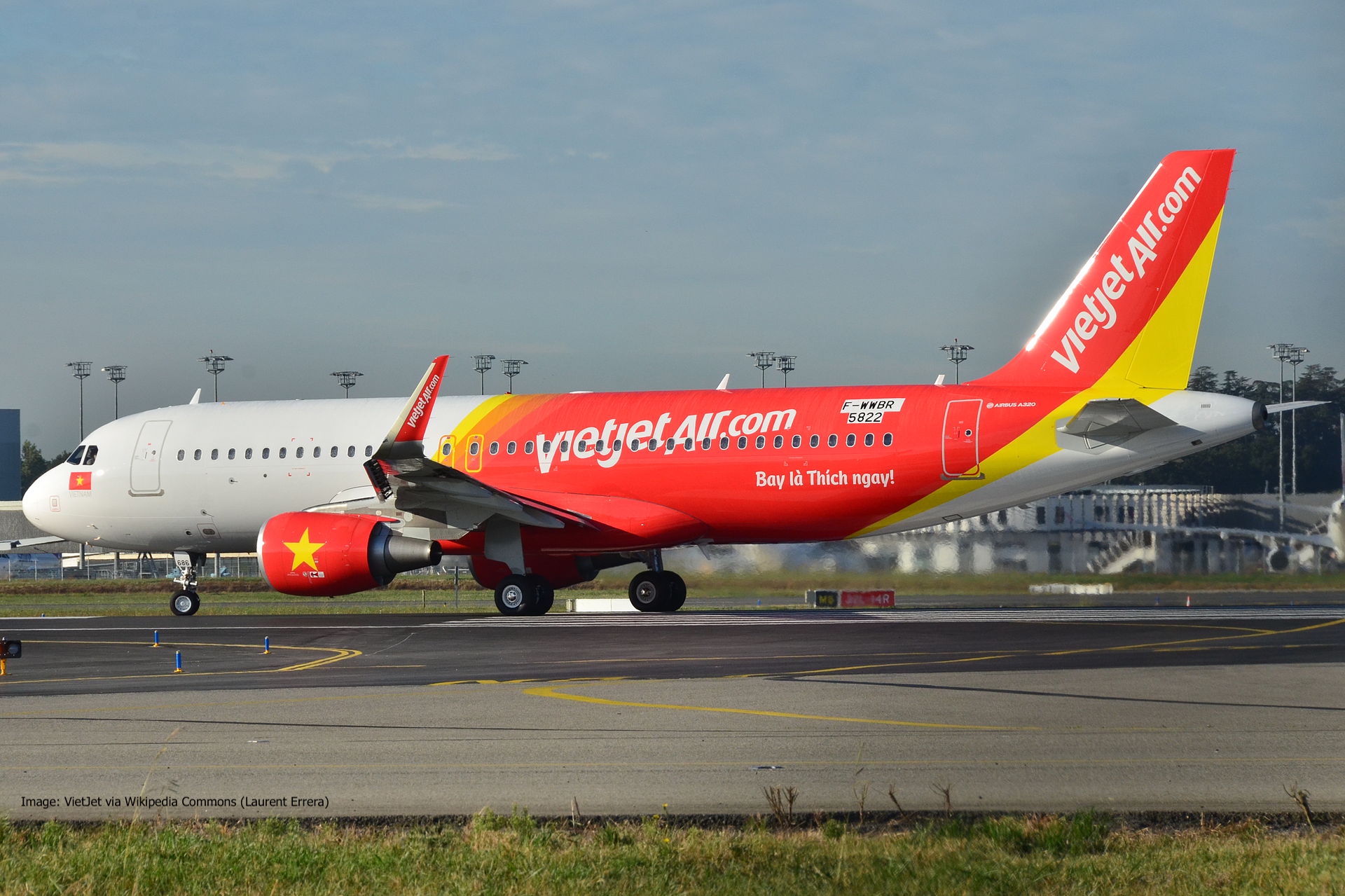
Vietjet has just been hit with a UK court order freezing the company’s global assets over a dispute with a London-based hedge fund that says the airline owes roughly US$250M in payments for aircraft leases.
The amount has been due since 2021, and Vietjet has made no attempts to pay its bills, so now the financial firm has taken the matter to court and secured at least a halfway victory.
While a UK judgment is hard to collect on, if not impossible, in most of the countries where the airline operates, keep in mind that Vietjet also flies (or wants to fly) to countries where it would be possible to cooperate with local law enforcement to seize assets, as they are on friendly terms with the UK.
One such country is Australia, for example, where Vietjet wants to fly, but that now seems in doubt, with the risk of jets being seized hanging over it, and even securing landing rights might be affected by the judgment.
As AFR reports, this legal dispute has been going on for roughly five years until patience has finally run out now and the creditor was able to sign off on the application.
Vietjet’s plans to expand into the Australian domestic aviation market have been dealt a blow, after the British High Court granted a London-based hedge fund a worldwide freezing order over the airline’s assets.
FitzWalter Capital, a firm run by former Macquarie banker Ben Brazil that specialises in distressed debt, has been pursuing the Vietnamese carrier since 2021 over unpaid leases on four Airbus aircraft that total about $US250 million.
A previous bid to put a worldwide freezing order on Vietjet’s assets failed last year after the court said there was an insufficient risk that the airline could conceal or hide assets.
But in a decision late last week, High Court judge Pushpinder Saini found that Vietjet had been divesting to a Cayman-incorporated shell company, Angelica Holding Limited.
“The evidence before me amply supports [FitzWalter’s] description of VietJet’s attitude being that of a ‘won’t pay’ debtor rather than a ‘can’t pay’ debtor,” said Saini.
The court found that Vietjet had transferred or divested valuable economic rights over its main asset – an order book of about 300 aircraft – to Angelica Holding. It ruled that the company’s previous assurances that it had been actively working to raise financing to repay the debts were false or misleading.
Earlier this month, the same court said FitzWalter could recoup some of the $US250 million by appointing turnaround specialist Alvarez & Marsal and taking control of assets as varied as agreements made by Vietjet to acquire Boeing and Airbus aircraft.
The dispute with FitzWalter arose after Vietjet ran into financial difficulties during the pandemic and missed payments on the four Airbus aircraft. The airline has refused to repay the debt – which is more than $US2 million – and was found by the High Court to have “conducted and orchestrated a campaign in Vietnam … designed to interfere” with attempts to return the aircraft.
At the same time, its first Boeing 737 aircraft has been registered in Australia, as Vietjet pushes ahead with plans to secure regulatory approvals to set up a domestic airline, competing with Qantas and Virgin Australia. …
Vietjet’s plans to secure an air operator certificate could now be in danger, and one thing creditors don’t like is when airlines have pending or active judgments against them. It’s widely seen as a red flag that deeper financial issues are plaguing the company, and aircraft lessors might eye the company’s aircraft to repossess.
Another part of aviation operations that relies on good credit is airport fees and fuel supply. If there is a danger that an airline doesn’t pay or can’t pay its bills anymore, these entities typically start to require upfront payment
However, this seems more like personal animosity between the owners of Vietjet and the people who run FitzWalter, with Vietjet essentially saying for over five years, “you can’t touch us, we’re far away from London,” and then pursuing legal action.
Conclusion
A London-based financial firm has secured an asset freeze order from the UK High Court against Vietjet for unpaid debts related to four Airbus jets that Vietjet has been flying but avoided paying the leasing bills on.
This goes back to the pandemic, when the fund expected Vietjet to pay up on time, but it simply couldn’t. Vietjet said the firm was unreasonable, and then it turned into a personal feud.
At this point, it’s probably not just about the payment but also about sticking it to them and making the process hurt. If this dispute now threatens the new Australia operation, that could be rather terrible for Vietjet.
Is Vietjet getting out of eventually paying what they owe? Probably not, because that would threaten other parts of their operation, and other business partners would eventually get wary. Pay your bills and get over it!