
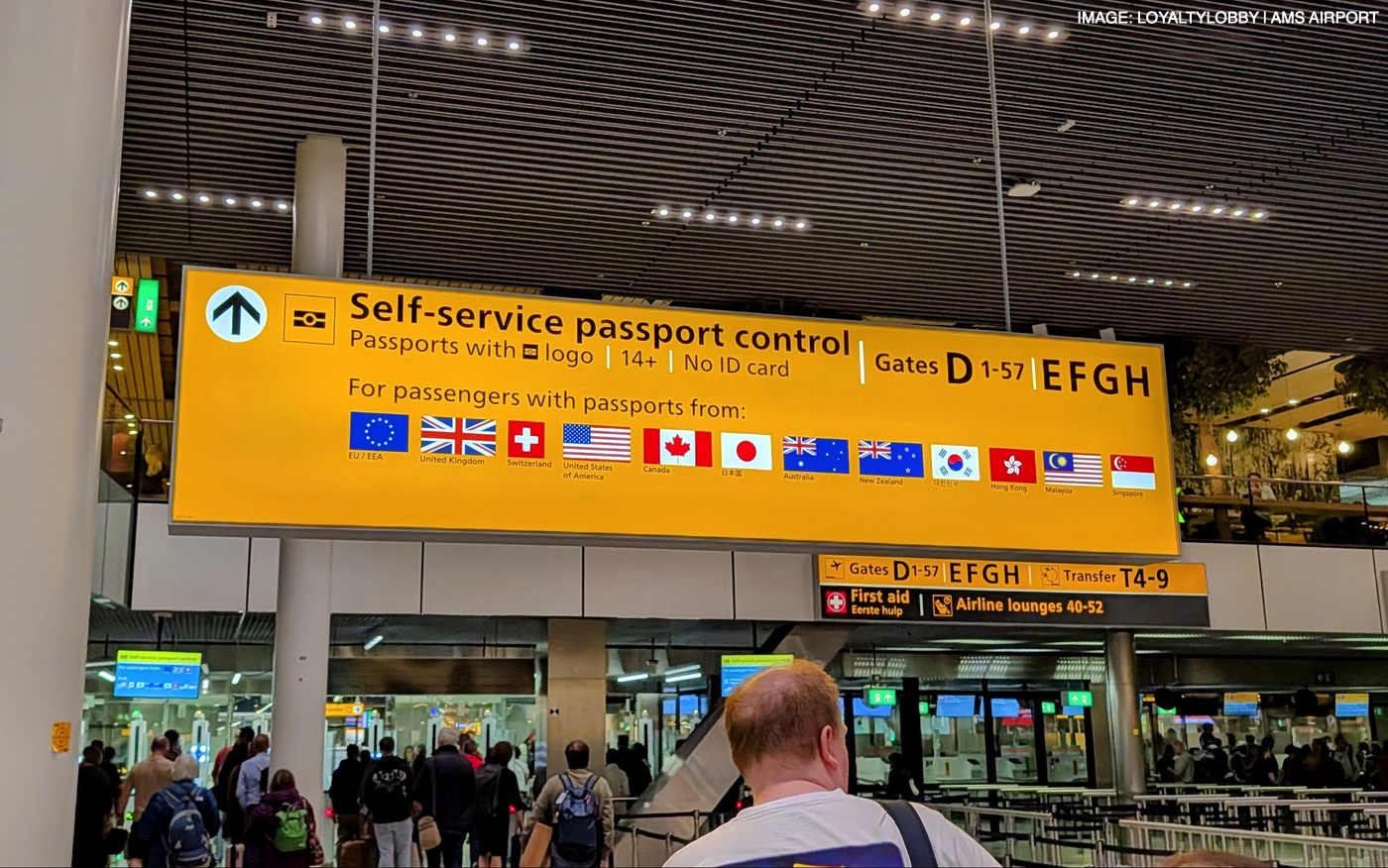
A LoyaltyLobby reader sent us back in October an interesting case, which we published at the time, about the European Entry-Exit System (EES) not properly recording their exit because a border guard manually stamped them out, and we now have an update.
Have a mishap, a loyalty story, or something else travel-related to share? Please send it to us at john@loyaltylobby.com for a possible feature.
Reader’s Update:
We travelled to Tenerife, arriving on the 05/11 and leaving on 12/11. We took our boarding passes from Alicante with us but didn’t need them. The EES system let us in and out without any problem.
I hoped that as we now had a record of us leaving the EES area, that would resolve the issue. On checking, the system now said –
‘Your remaining authorised stay cannot currently be calculated due to temporary incomplete data in the Entry/Exit System’.
So I had to email again asking for the data to be corrected. I included scans of our Alicante exit stamps, the boarding passes for Alicante and Tenerife, plus a scan of our passports that had been certified by a solicitor.
This worked and today I received an email informing me that the data had been corrected.
All in all a drawn out process and a lesson learned – Make sure you passports are properly scanned both in an out of the are covered by the EES.
Here’s Our Previous Coverage Reader’s Note:
I thought you and you readers might be interested in an issue I am dealing with relating to the EES.
My wife are UK based and had a 6 day trip to Alicante, returning to the UK on the 17/10/26.
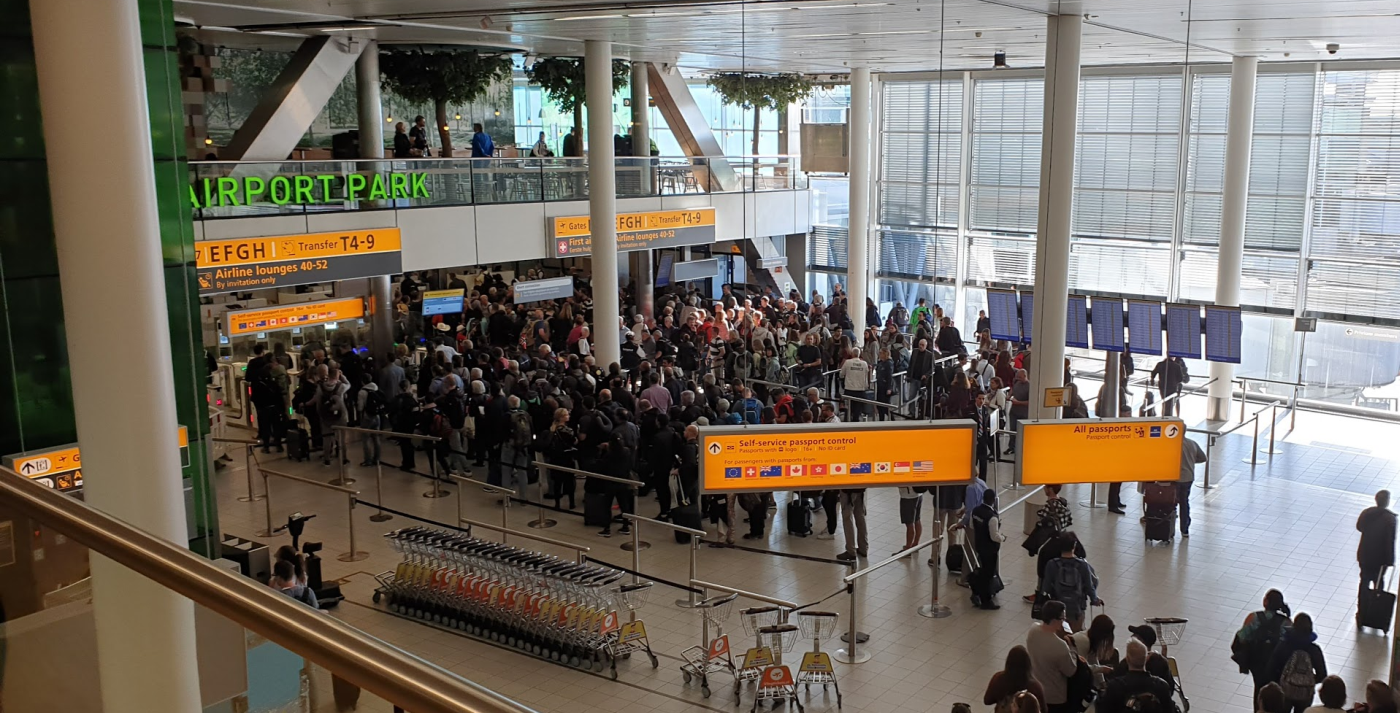
The queues for the EES gates were huge and there were a lot of flights to the UK leaving around the same time. There was a risk that a lot of people were going to miss their flights so the staff opened more gates, including the one for EU Nationals, which we were directed to.
Our passports were stamped and it wasn’t until later that I realised that they hadn’t been scanned and therefore as far as the EES was concerned, we were still in Alicante. This was confirmed when I used the EES systems to check how long I could stay. I checked over a couple of days and each day the remaining days that I could stay reduced.
The EES web sites states that if you have an issue, email the Spanish Data Protection Officer, which I did, enclosing scans of our passport stamps and boarding passes.
Today (31/11/26) I received an email with a attached PDF which I needed to use ChatGPT to translate. In short, the application was rejected. We now have 10 days to provide one of the following:
a) A certified or officially authenticated copy of your identity document, certified by a competent Spanish authority (for example, a Spanish Consulate). b) A valid electronic signature in accordance with Article 10.2 of Spanish Law 39/2015. c) A document that has been properly apostilled in accordance with the Hague Convention of 5 October 1961.
Furthermore, if the document is written in a language other than Spanish, it must be accompanied by an official translation into Spanish.
If you do not correct the deficiencies mentioned above, your application will be treated as withdrawn.
We are heading to Tenerife on 05/11/26 and I plan to phone the Spanish Embassy before we travel to get their advice.
I guess that there is the possibility that when we leave Tenerife, as long as we scan our passports, the issue will be corrected.
There have been quite a few issues with the EES launch, and it was first significantly delayed, and then countries were turning it on/off depending on what level of lines and delays it was resulting in.
EU’s Entry/Exit System (EES) Begins Today & ETIAS Late 2026
EU’s Entry/Exit System (EES) Now In Full Force & ETIAS (Pehaps) Late 2026
Italy & Other European Countries May Have To Suspend EES During Summer Months To Process Passengers
It seems one issue is that each Schengen country acquired the required machines individually, rather than installing the same equipment across the entire bloc.
But then a system like this works quite well in many countries such as Australia, the UK, New Zealand, Canada, Singapore, and several others.
I believe the reader has already done everything they can, and nothing is preventing them from boarding the flight back to Schengen and then asking the border guard to correct the record.
If the EES works correctly, the automated gate shouldn’t allow entry into Schengen if the previous exit was not recorded at all.
These theoretical “overstays” can cause issues in the future when the EU has the ETIAS in place, and you need to apply for the permit to enter the block:

EU Delays ETIAS Into 2027 (Or Later) After EES Chaos
ETIAS is also very delayed, and I doubt that it will be in place anytime soon, at least not until this EES works more smoothly.
Conclusion
The reader should keep the boarding passes from the flight out of Schengen, then ask the agent to correct the record when they enter Spain in less than a week.
I had a somewhat similar case once, exiting Australia, and I wasn’t aware of it before boarding the next flight to the country.
I had previously exited through the automated gates in Perth, and flown with Cathay to Hong Kong. When I tried to check in for a Qantas flight to Sydney in Bali, the agent had to call a special number to clear me. Apparently, I had never left Australia, and the previous exit at Perth was not recorded at all.
I still had the boarding pass with me to prove it, and the e-ticket record was obviously somewhere in my email as well.
They quickly fixed this (I am not sure where these calls are answered), and I was checked into the flight, and I had no issues using these automated gates in Australia.
But back to this EES.
It wasn’t that uncommon in the past to be waved through immigration if you were from the right country, or if the agent just quickly looked at the photo.
At least within the Schengen zone, all the entries and exits, even by the block nationals, should be recorded nowadays.
There must be tens of thousands of cases like the reader’s, and I am sure these passport control employees are aware of the system’s limitations, especially in Southern Europe.
But it seems they really don’t want anyone to have their record corrected manually, even if these are the steps required to correct it, which take several days of work.
Conclusion
What an ordeal for the reader to get that exit record from the Schengen area corrected, albeit not as burdensome as originally communicated.
This likely wouldn’t have caused issues now, but who knows what happens when Schengen countries have the ETIAS (ETA/ESTA) system in place, which should prevent overstays and such.
The implementation of this EES has been a disaster, likely because every country has acquired its own hardware. The entry and exit processes are not as smooth as they should be, but let’s hope that all these kinks are resolved out by 2027.